

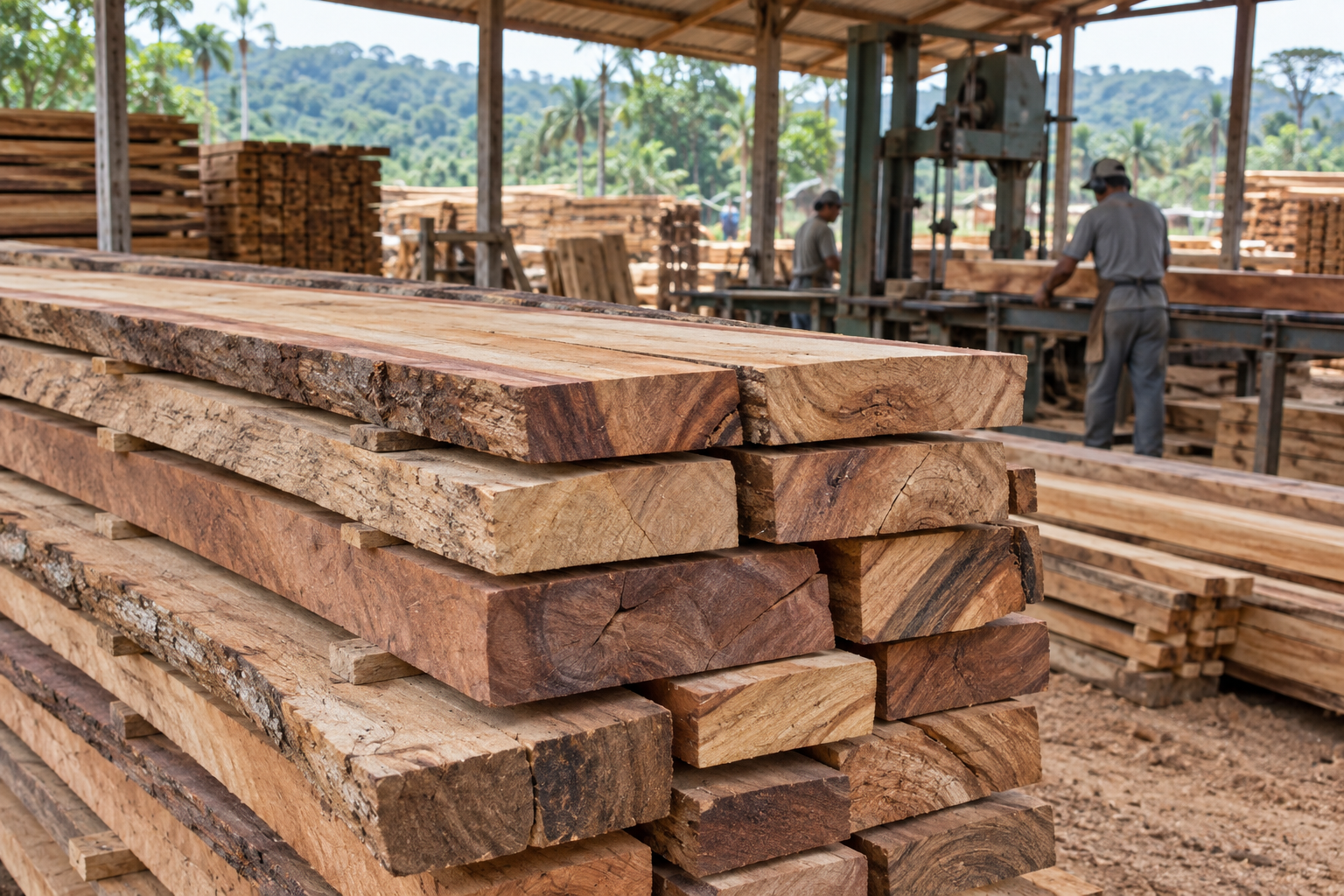
The piece has changed shape. Has its connection to origin survived?
DOF+ supports traceability of native forest products subject to its controls, including after processing. At a sawmill, records should connect receipts, conversions, and shipments. Documentation requirements depend on origin, species, product, and applicable rules; they are not identical for all wood.
Technical context: Ibama — DOF+ traceability (opens in a new tab).
The supply chain journey
- Forest origin
- Transport
- Sawing
- Dispatch
Illustrative journey: the actual organization varies by operation.
What to organize in practice
A starting point for a conversation with your technical team:
- Identify species, origin, and authorization where required.
- Reconcile transport documents with incoming deliveries.
- Connect input volumes, processing, residues, and output.
- Retain tracking codes and documents applicable to the product.
An everyday situation
A sawmill receives logs and sells processed pieces. The new commercial lot should connect to its source deliveries, with transformations recorded.
An important distinction
A Brazilian transport document should not be presented as a European due diligence statement. Native and plantation wood should not automatically receive the same checklist either.
How this connects to Trace
Use farm records, supplier and lot relationships, and documents to organize what your operation can demonstrate. Record the gaps too: declared information and verified evidence are not the same thing.
Explore the features and their limitsTraceability questions for this supply chain
Does DOF+ replace an EUDR due diligence statement?
No. DOF+ is a Brazilian system associated with controls on the origin, transport, and storage of forest products within its scope. A DDS belongs to the European regulatory process. Keep applicable documents and check what each demonstrates, without treating one as an automatic replacement for the other.
How can origin be retained when a sawmill processes logs?
Connect incoming deliveries to the lots of pieces produced, recording species, volumes, and transformations. Do not automatically apply the same checklist to native and plantation wood. The commercial lot should allow its known source deliveries to be reconstructed.
Organizational guidance. Technical and legal assessment depends on the operation and available evidence.