

Can the fermentation lot still be identified when the beans are sold?
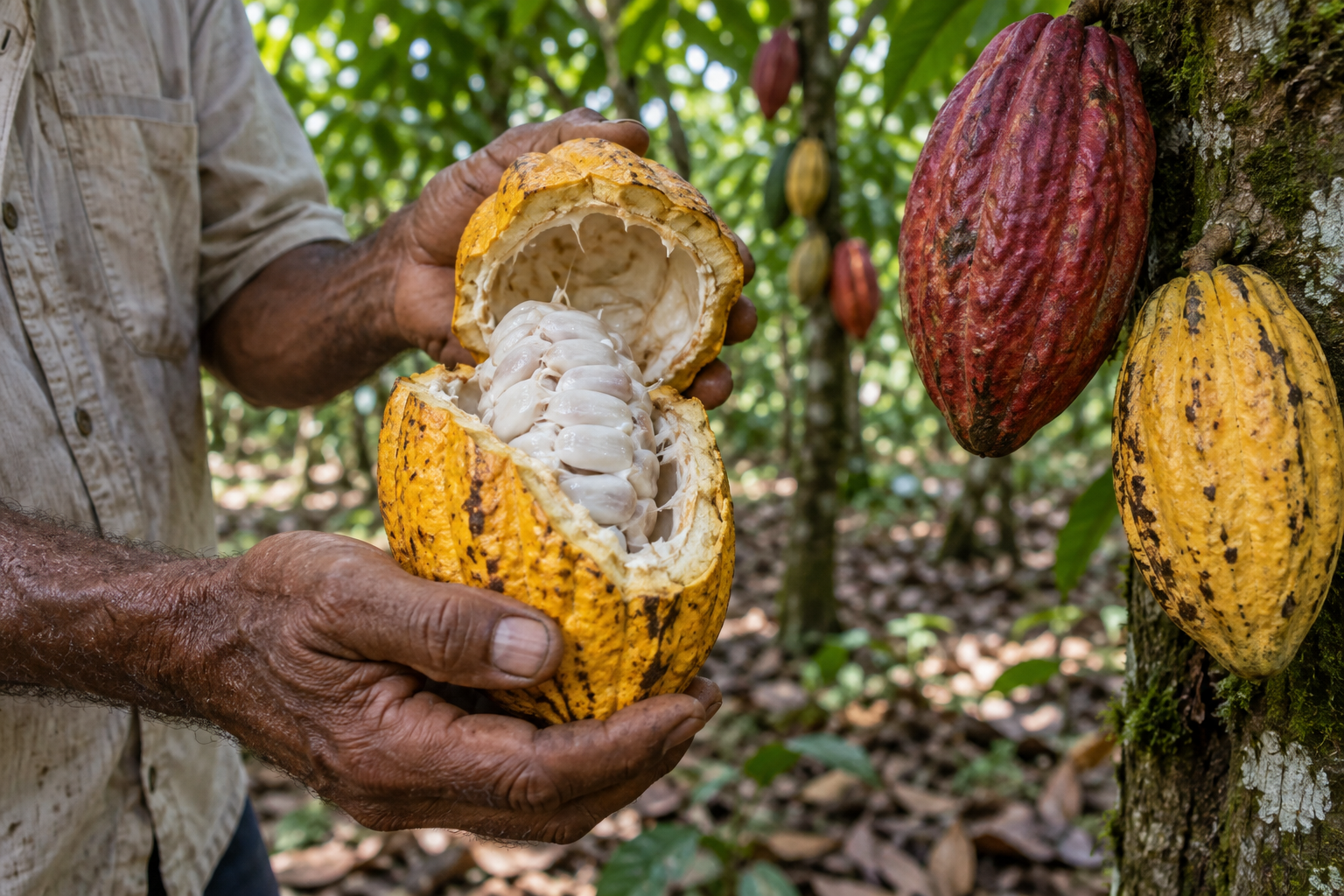
Ceplac highlights the role of ripeness, fermentation, and drying in quality. When different deliveries reach one post-harvest facility, recording each lot’s composition preserves its story without confusing sensory quality with proof of origin.
Technical context: MAPA / Ceplac — cocoa quality and post-harvest practices (opens in a new tab).
The supply chain journey
- Harvest
- Fermentation
- Drying
- Bean sales
Illustrative journey: the actual organization varies by operation.
What to organize in practice
A starting point for a conversation with your technical team:
- Connect each cocoa delivery to its producer and production area.
- Identify the fermentation lot and the start of processing.
- Record the connection to the dried lot and bags.
- Document combinations of beans from different suppliers.
An everyday situation
An association receives cocoa from several families for shared fermentation. The final lot should retain the composition of those deliveries and their production areas.
An important distinction
Describing cabruca, a Brazilian agroforestry system, or another production system provides context. The name alone does not establish the land-use history.
How this connects to Trace
Use farm records, supplier and lot relationships, and documents to organize what your operation can demonstrate. Record the gaps too: declared information and verified evidence are not the same thing.
Explore the features and their limitsTraceability questions for this supply chain
How can cocoa lots be identified during fermentation and drying?
Use identifiers that connect incoming beans to the producer, known origin, and post-harvest stage. Record whenever a lot is separated or combined. A fermentation sheet can complement the history but does not replace origin records.
How can purchases from several smallholders be organized?
Keep each incoming delivery identified before combining material. Connect the commercial supplier to known producers and record outstanding information. Naming only the intermediary does not describe every production area in a lot.
Organizational guidance. Technical and legal assessment depends on the operation and available evidence.