

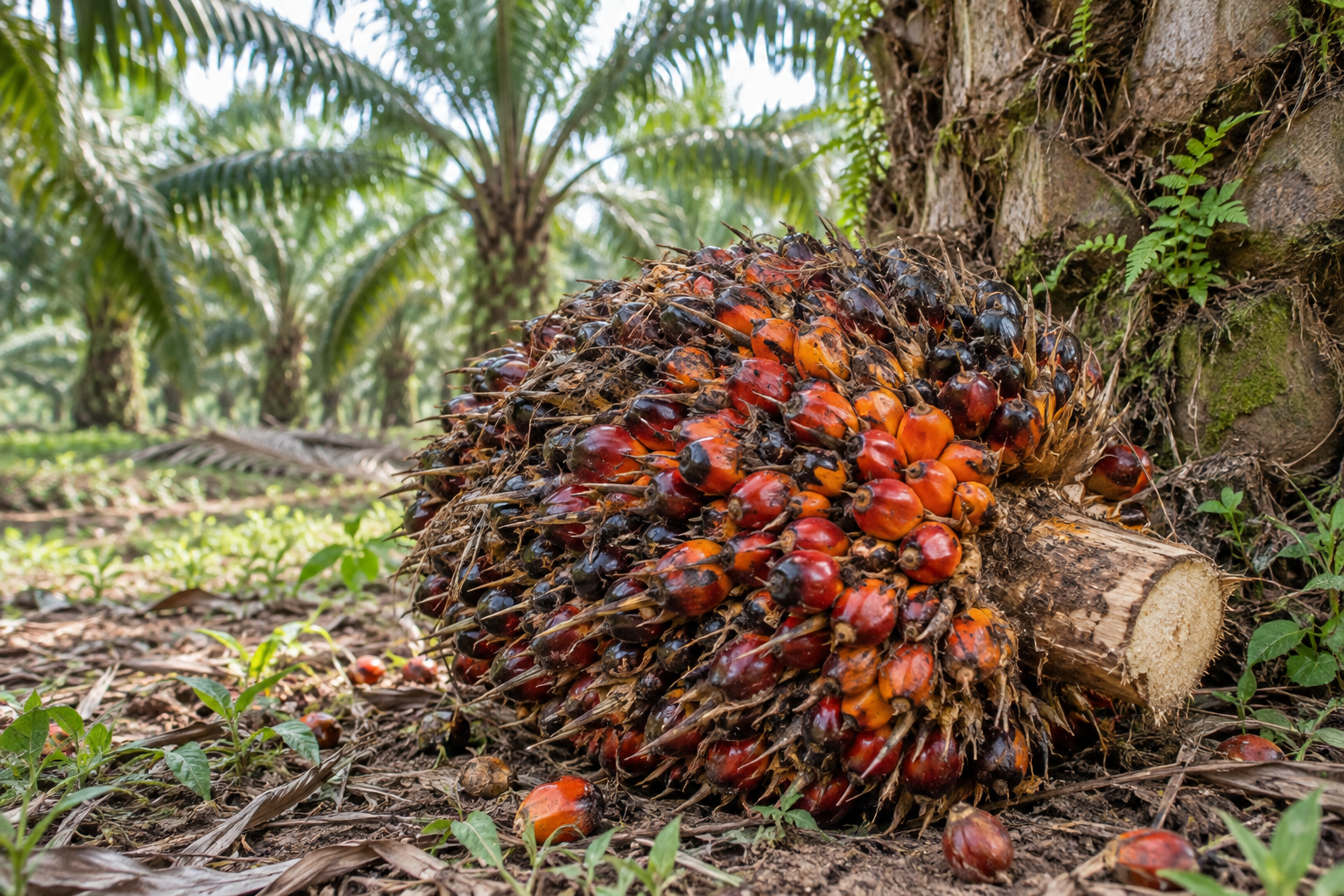
The mill is identified. What about the suppliers of the fruit bunches?
The interval before processing affects oil quality. Collection and receiving need to be efficient, but the mill’s name should not replace identification of the production areas supplying it. The connection between incoming deliveries and processing needs its own records.
Technical context: Embrapa — technical foundations of oil palm cultivation (opens in a new tab).
The supply chain journey
- Bunch harvest
- Collection
- Mill receiving
- Processing
Illustrative journey: the actual organization varies by operation.
What to organize in practice
A starting point for a conversation with your technical team:
- Connect each delivery to its producer and harvest area.
- Record dates, weights, and the receiving facility.
- Identify the processing period associated with incoming deliveries.
- Distinguish the commercial product and its transformations.
An everyday situation
A truck collects fruit bunches from several farms. One weighing ticket at the mill does not explain that composition without collection records.
An important distinction
Traceability to the mill and traceability to the production area are different levels. Reaching the first does not complete the second.
How this connects to Trace
Use farm records, supplier and lot relationships, and documents to organize what your operation can demonstrate. Record the gaps too: declared information and verified evidence are not the same thing.
Explore the features and their limitsTraceability questions for this supply chain
Is Brazilian dendê oil relevant to EUDR?
Yes. Óleo de dendê is a common Brazilian name for palm oil. When assessing an operation, identify the product and its classification under the regulation; do not assume every derivative has the same regulatory treatment.
How can fruit bunches received by a mill be connected to an oil lot?
Connect known areas and suppliers to fruit bunch deliveries and the processing period. Record the inputs that formed the oil lot and documented transformations. The mill’s name alone does not identify the origin of every delivery it processed.
Organizational guidance. Technical and legal assessment depends on the operation and available evidence.