
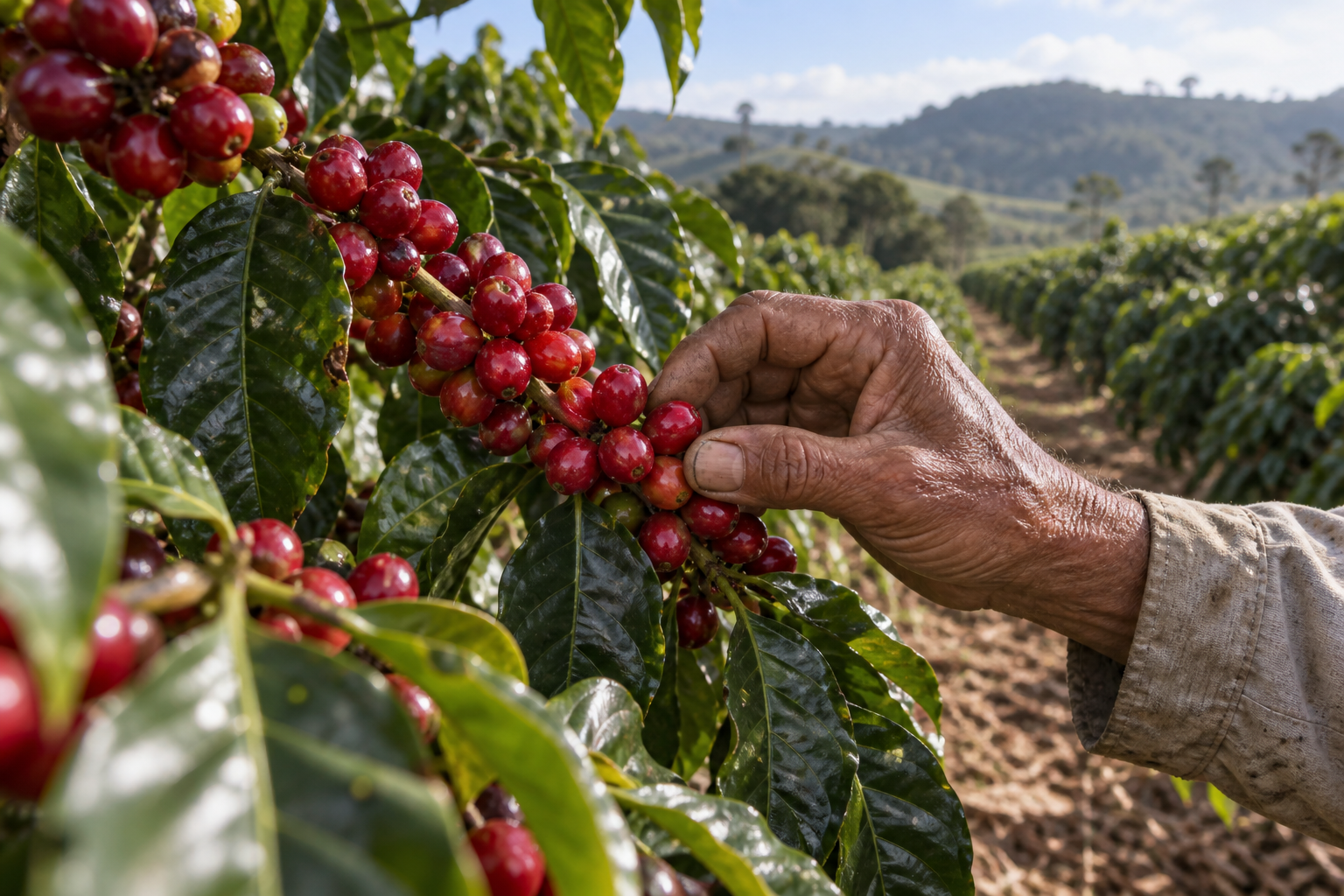
The coffee has changed form. Can you still find the field it came from?
Dry or wet processing, drying, and milling create different routes. Embrapa highlights the importance of keeping lots separate. In documentation, species, crop season, and processing help describe the product; they do not replace origin records.
Technical context: Embrapa — coffee processing, drying, and milling (opens in a new tab).
The supply chain journey
- Field and harvest
- Drying
- Milling
- Commercial lot
Illustrative journey: the actual organization varies by operation.
What to organize in practice
A starting point for a conversation with your technical team:
- Identify the producer, production area, and harvest period.
- Distinguish arabica from canephora and record the processing method.
- Keep connections when a lot is split, processed, or combined.
- Connect shipped bags and commercial documents to their source lots.
An everyday situation
Two microlots pass through the same processor. If they are combined to fill an order, the commercial lot should point to both, even if it receives a new identifier.
An important distinction
Cup quality, geographical indications, and certifications can enrich a commercial story. None should be treated on its own as an EUDR conclusion.
How this connects to Trace
Use farm records, supplier and lot relationships, and documents to organize what your operation can demonstrate. Record the gaps too: declared information and verified evidence are not the same thing.
Explore the features and their limitsTraceability questions for this supply chain
How can coffee origin be retained after milling?
Keep the link between the field, harvest, incoming lot, and processed lot. Record splits and combinations using available receiving, storage, and dispatch documents. Quality classification and origin history answer different questions.
What should be recorded when a blend combines coffee from different growers?
Identify the lots used in the blend, their suppliers, and known production areas. Geolocation for one farm does not automatically represent every component. Bring gaps to review before presenting the material to the buyer.
Organizational guidance. Technical and legal assessment depends on the operation and available evidence.