

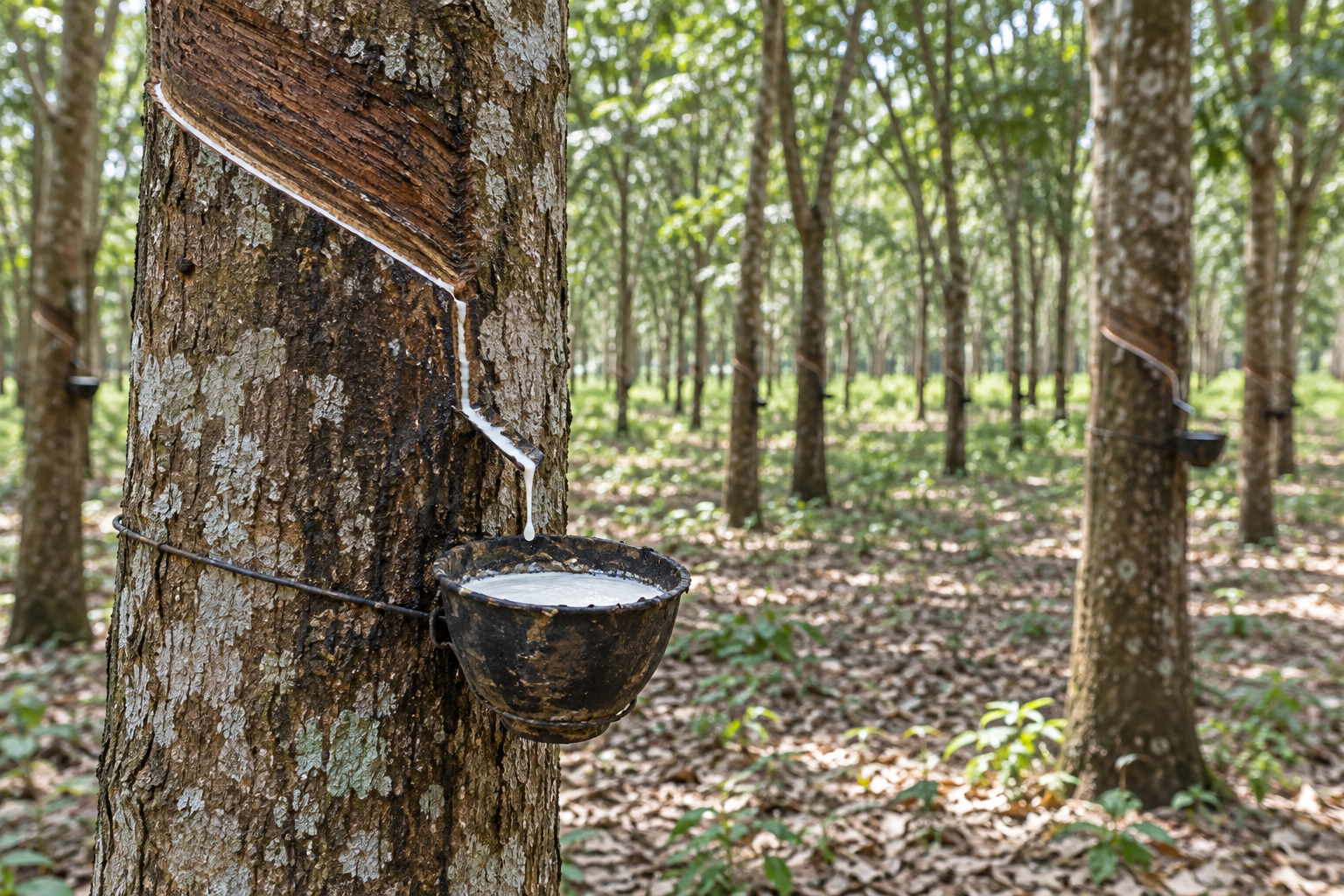
When collections are combined, can you still identify the rubber grove?
Processing prepares latex and natural rubber for industrial uses. Collections from several producers may reach the same facility. Distinguishing the incoming material’s form and collection period helps connect it to a processed lot.
Technical context: Embrapa — latex and natural rubber technology (opens in a new tab).
The supply chain journey
- Tapping and collection
- Receiving
- Processing
- Industrial lot
Illustrative journey: the actual organization varies by operation.
What to organize in practice
A starting point for a conversation with your technical team:
- Identify the producer and collection area or rubber grove.
- Record the collection period, supplier, and form of incoming material.
- Retain the inputs that make up the processor’s lot.
- Explain quantity conversions and dispatch documents.
An everyday situation
An association combines coagulated rubber from several groves. The processor gives the product a new code; its connection to the original collections needs to remain accessible.
An important distinction
Natural and synthetic rubber are not the same raw material. Product composition and classification need examination before any conclusion about regulatory scope.
How this connects to Trace
Use farm records, supplier and lot relationships, and documents to organize what your operation can demonstrate. Record the gaps too: declared information and verified evidence are not the same thing.
Explore the features and their limitsTraceability questions for this supply chain
How can natural rubber purchased through intermediaries be traced?
Connect latex or coagulated rubber deliveries to known groves, suppliers, and collection periods. Keep these connections through receiving and processing. If information stops at the intermediary, record that the production origin still needs clarification.
Are collection weight and processed quantity enough to establish origin?
No. Quantities help reconcile the flow but do not identify where the material was produced. Record lot composition and the measurement basis as well, distinguishing incoming weight from dry rubber quantity.
Organizational guidance. Technical and legal assessment depends on the operation and available evidence.